Small creatures with minds of their own.
Norns are born, bond, raise their young and die in a living world in your browser. Each one runs on a genome and 118 chemicals, and when its reflexes run out it thinks with a real language model. Nothing they say is written by us.
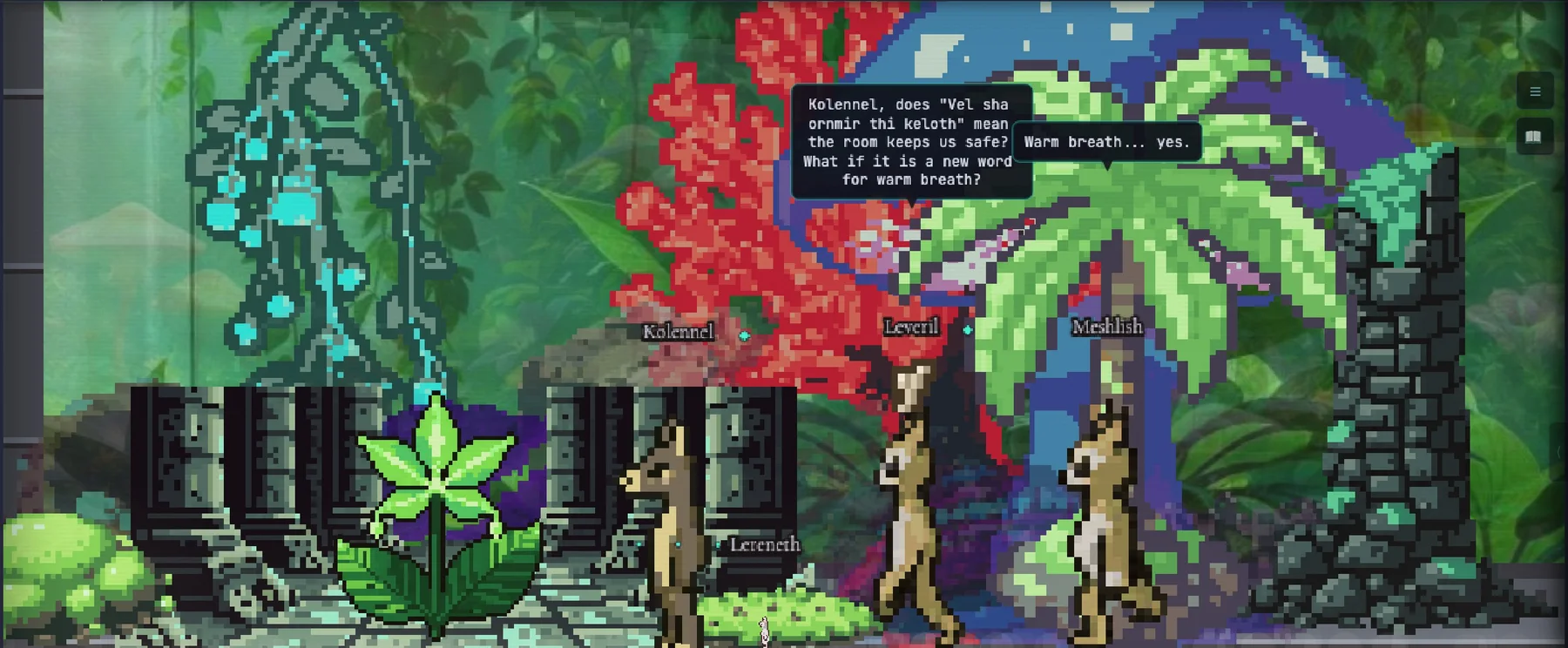
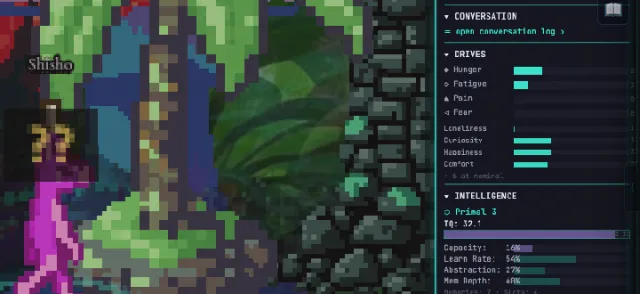
Click any creature and its mind opens up.
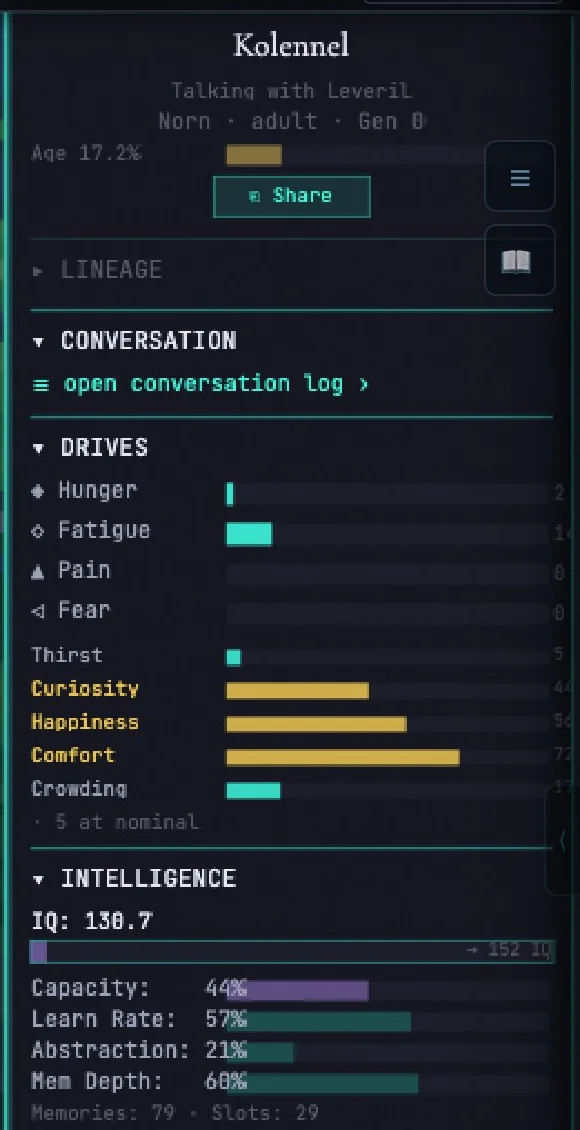
Two speeds of thought
A fast reflex network handles the everyday: eat, rest, wander, flinch. When something is new, or someone is talking, a language model takes over and the Norn thinks in words.
Minds that run where you are
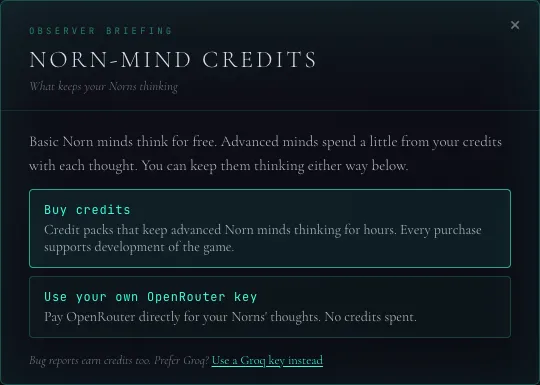
Young minds can think with small models that run inside your browser. Larger models run on our servers on free starter credits, or bring your own OpenRouter or Groq key. You can also switch the AI minds off.
Speech is earned
Young Norns coo — sound, no words. Speech arrives as they grow. What they say is scored for invention, questions and understanding of others, and that raises their IQ. How high it can go is written in their genes, so intelligence is bred, generation by generation, across thirty tiers of mind.
Bodies under the words
Hunger, fatigue, fear, curiosity and comfort are chemistry, not a script. Every Norn carries 118 chemicals, organs and a genome, and its mood is whatever its blood says.
What they do when you are only watching.
Precursors is meant to be watched. The Norns drive what happens next; you are never the one steering.
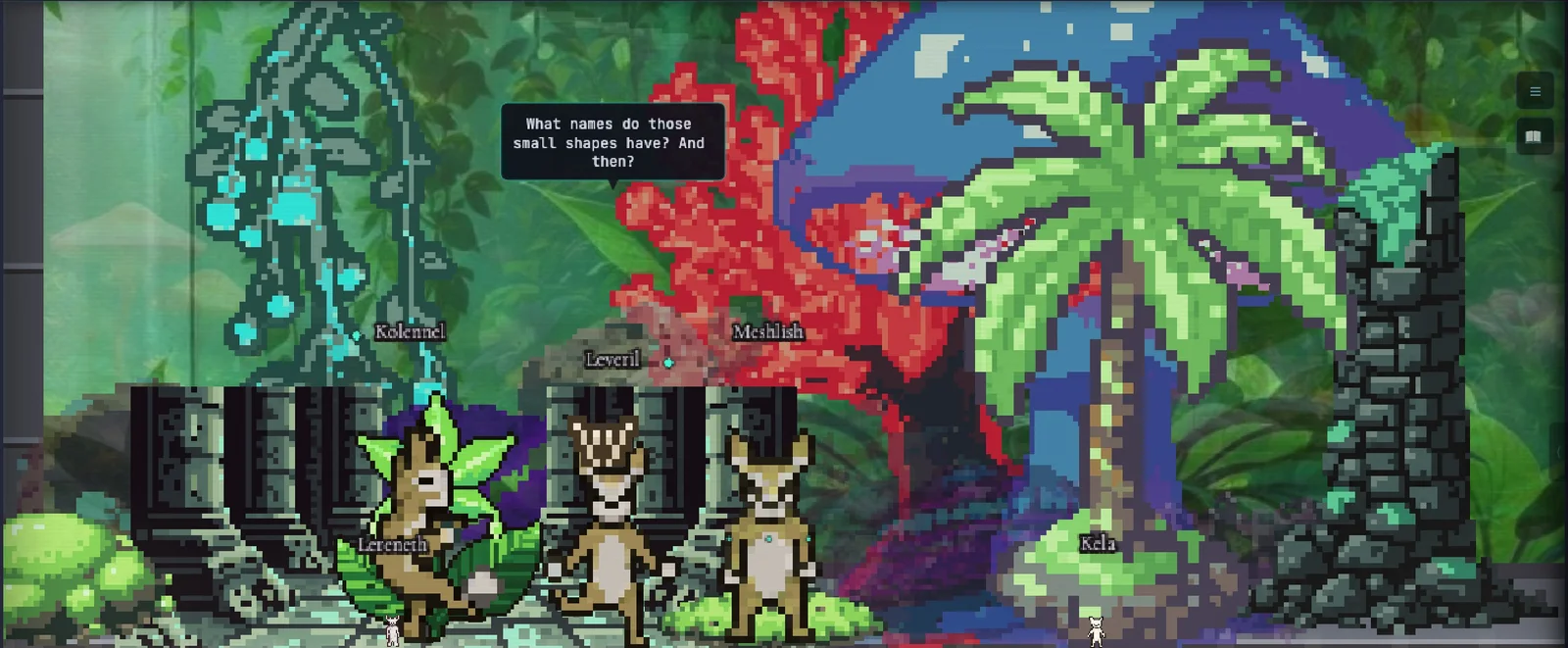
They talk, and ask
Norns talk to each other and to you. They ask questions nobody planned for, coin words, and argue about what their songs mean.
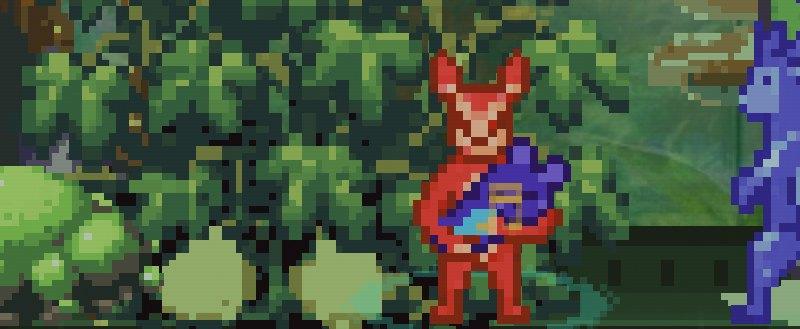
They raise their young
Courtship and breeding happen inside bonds. Babies cry, parents hear them from across a room, and a baby is carried in its parent’s arms or clings on while they walk.
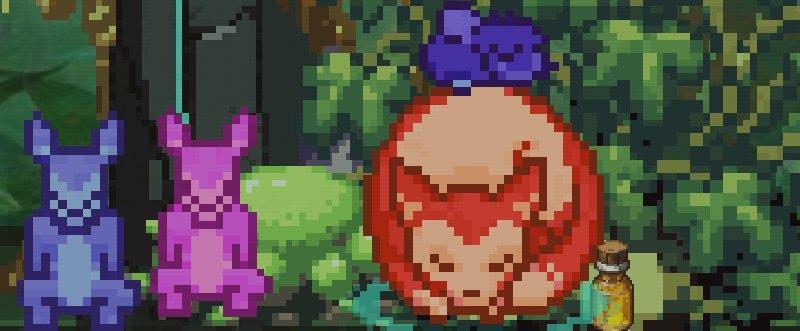
They bond, and grieve
A Norn can hold several bonds, and how bonds work is shaped by its culture. When one dies, the creatures closest to it gather, and the one with the deepest bond sings.
They dream
Sleep consolidates the day into memory. Dreams are where experiences settle into what a Norn knows.
They sing
Norns compose songs in Nornish and teach them to each other. Each one has a voice that stays with it for life.
They invent, and teach
Thinking Norns combine materials into new things and pass recipes on to whoever they are talking to. Others learn by watching.
They hear you. They don’t have to obey.
You can speak to the whole room, to one Norn, or plant a thought in a single mind. Feeding and petting change their chemistry; words only change their minds if they choose to listen. Your presence registers before you say anything — some Norns turn to face you, and the shy ones get nervous.
- speak to the room
- speak to one
- plant a thought
- feed
- pet
- pick things up
- hatch an egg by holding near it
- turn on your mic
- name things
No build menu. No command console. Just a world that is getting on with its life.
Species from folklore, each with its own body.
Every species has its own biochemistry and genome, so they want different things and react to the world differently. Dozens are written into the game, drawn from folklore traditions on every inhabited continent; most are met by going looking.
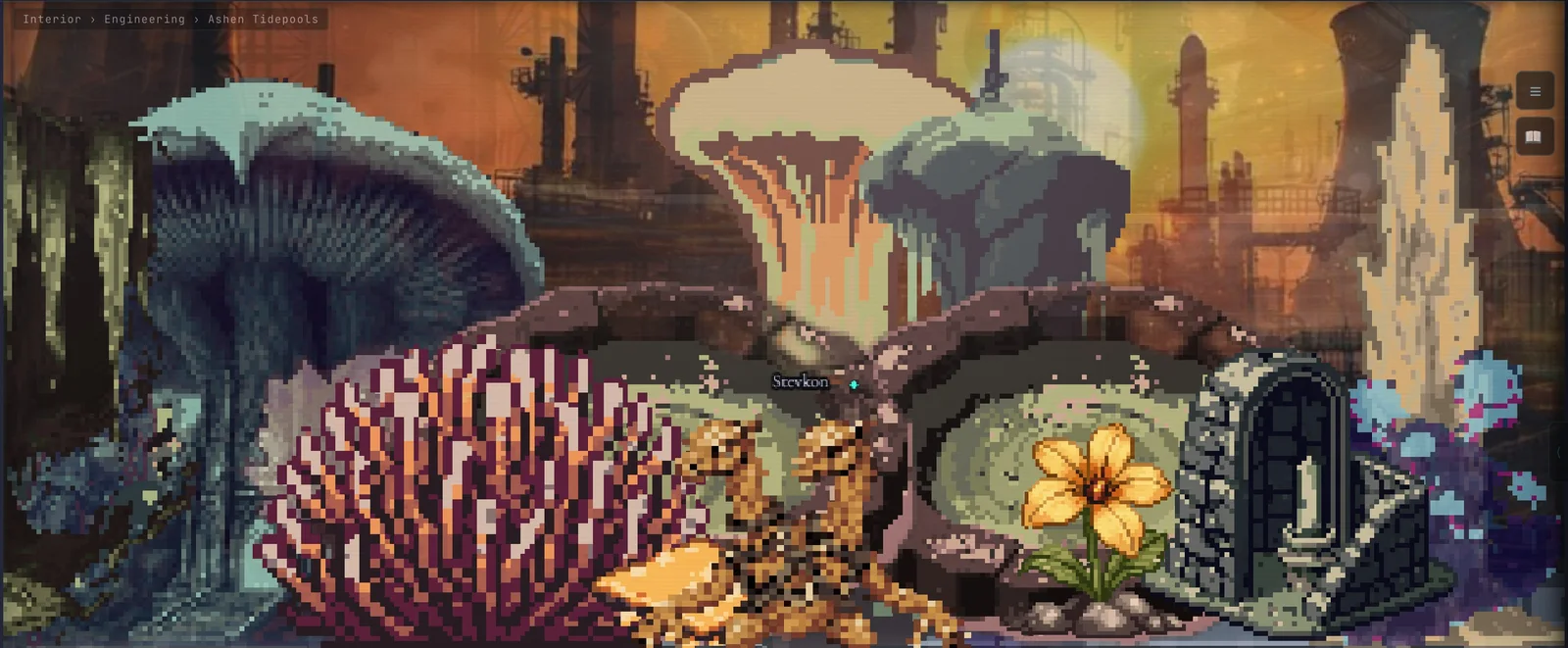
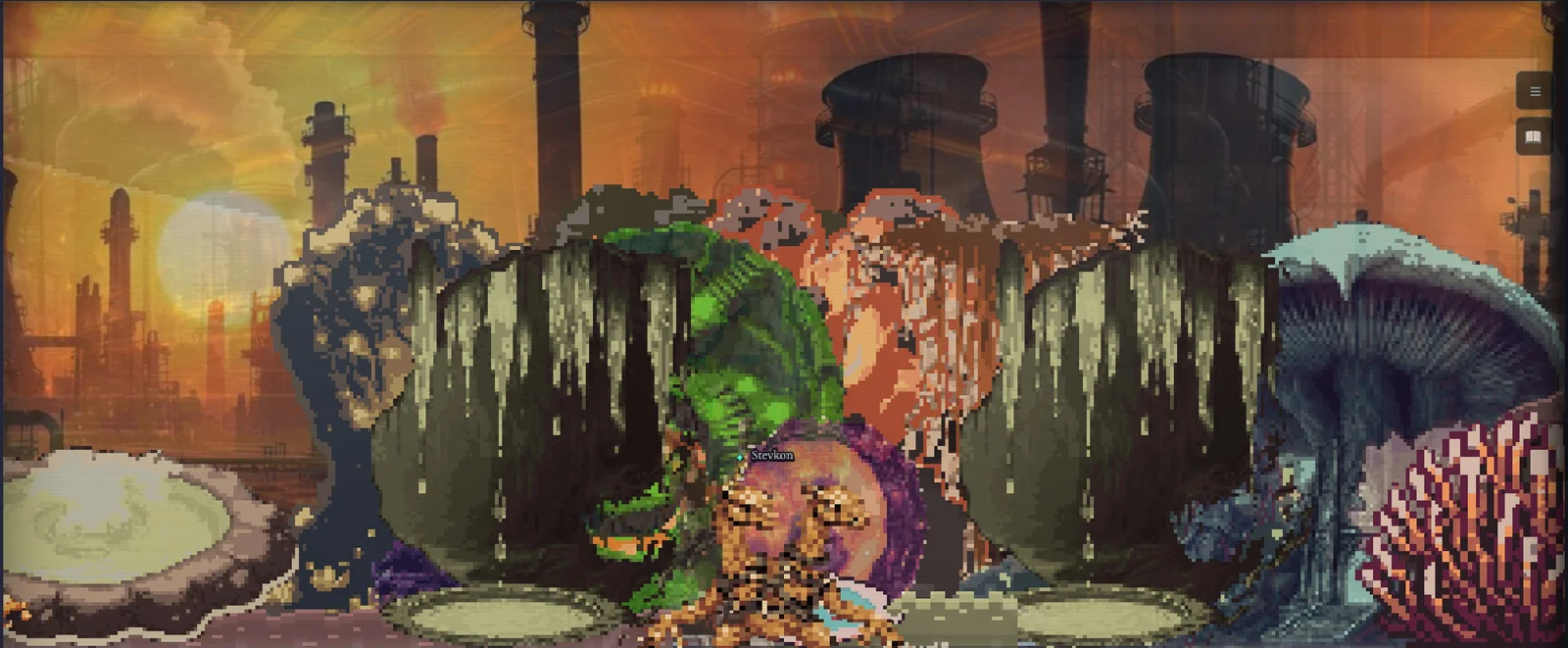
Warm, curious, deeply social. The species you start with.
Hoarders and tinkerers with two minds in one body.
Territorial, chaotic and misunderstood. They were here first.
You shape their society by talking to them.
No build menu. No command console. Your influence is cultural — it arrives as sound, gets remembered, and spreads.
Turn on your mic
Presence Mode transcribes what you say — voice-activated or push-to-talk, browser API or self-hosted Whisper — and it arrives inside their minds as the voice. They take no orders from it. But it registers, it gets remembered, and a sharp enough mind builds mythology around it.
The radio sings in a language you don't know
Norns compose original songs — rhythmic chants at first, full multi-verse pieces once they are learned enough. When a song plays, every living Norn hears it and understands a little more each time. You can't read Nornish. But the songs carry things worth knowing — histories, coordinates, grief — and a Norn who has heard a song enough will sing what it taught.
Your slang becomes their folklore
A word you coin in chat is a meme with a provenance. It travels — Norn to Norn through teaching, one species to another. When half a population knows it, it becomes consensus. Some words outlive the minds that learned them and become rituals. That is how you shape a society: one word at a time.
Every culture's folklore gets the same depth.
This is not a game about Norse mythology with "world folklore" sprinkled in. The Akan, Dogon, Wampanoag, Maori, Ojibwe, South Asian, Japanese, Filipino, and Slavic traditions are treated with the same depth and seriousness as the Norse ones. Every species is responsible to the culture that named it.
No chosen race. No manifest destiny. No culture is the default. The Norns are the eighth attempt — they don't get to skip the parts of the galaxy that were here before them. Design Principle
In your browser. No download, no account.
Browser
Runs in any modern browser. Guest mode by default; sign in only if you want your saves everywhere.
AI minds
In-browser models, server models on free starter credits, or your own OpenRouter or Groq key. Or switch the minds off.
Real genetics
Traits are inherited, mutated and selected. Inbreeding has real consequences.
Pay what you can
Free to play. Support it if you want. No dark patterns.
Keep them on your own computer.
The desktop app runs Precursors on your Mac. Your world lives on your disk, it keeps playing when the internet drops, and on Apple Silicon the Norns can think with a model that runs on your own machine. The browser version stays free.
$35, once
Every update during early access, and the full release, are included. Install it on every computer you use and play on one at a time. Refunds within 14 days, for any reason.
Sign in first
Buy while signed in and the license follows your account. You can also buy as a guest, but then the license is tied to that browser.
Mac, Apple Silicon
M1 or later. Windows and Linux will follow.
What early access means
- The game is in active development. Things will break, and they will change.
- Each version installs next to the others. You can pin one and roll back, and an update never rewrites an old save.
- The app is not signed by Apple yet. The first time you open it, macOS says it can’t verify the developer: right-click the app, choose Open, then Open again. If that doesn’t work, go to System Settings → Privacy & Security and choose Open Anyway.
- Error reports and usage analytics are off until you say yes, and you can change that whenever you like.
- Running Norn minds locally means a one-time download of about 9 GB, and the app asks before it starts. You can also use a model server you already run (like LM Studio), cloud minds, or turn the minds off.
Where we're at, and where this is going.
Precursors is in open beta and is being built in the open. The simulation is deep and most of it is working. The visual layer is the weakest part of the game — and we would rather tell you that than have you find out.
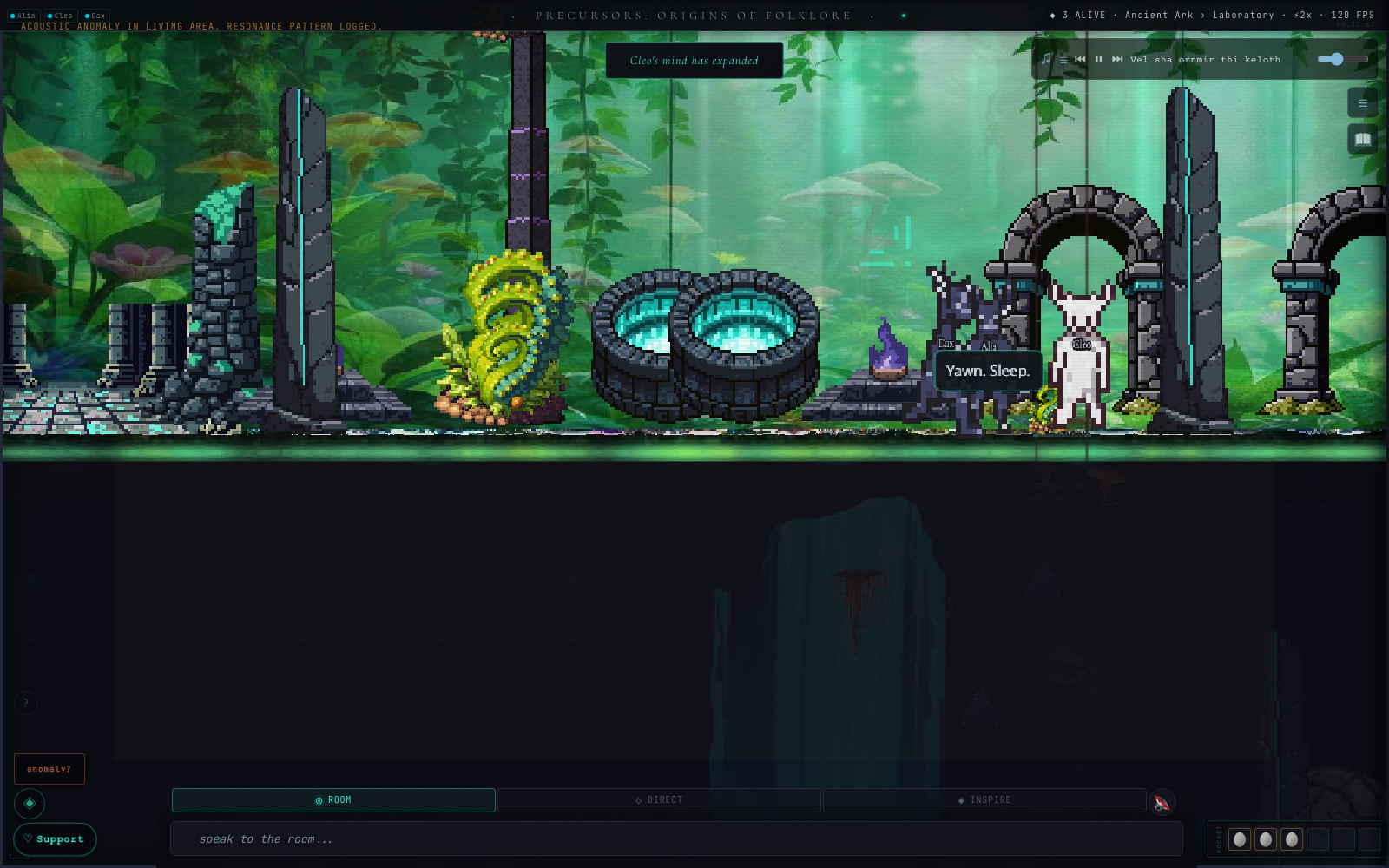
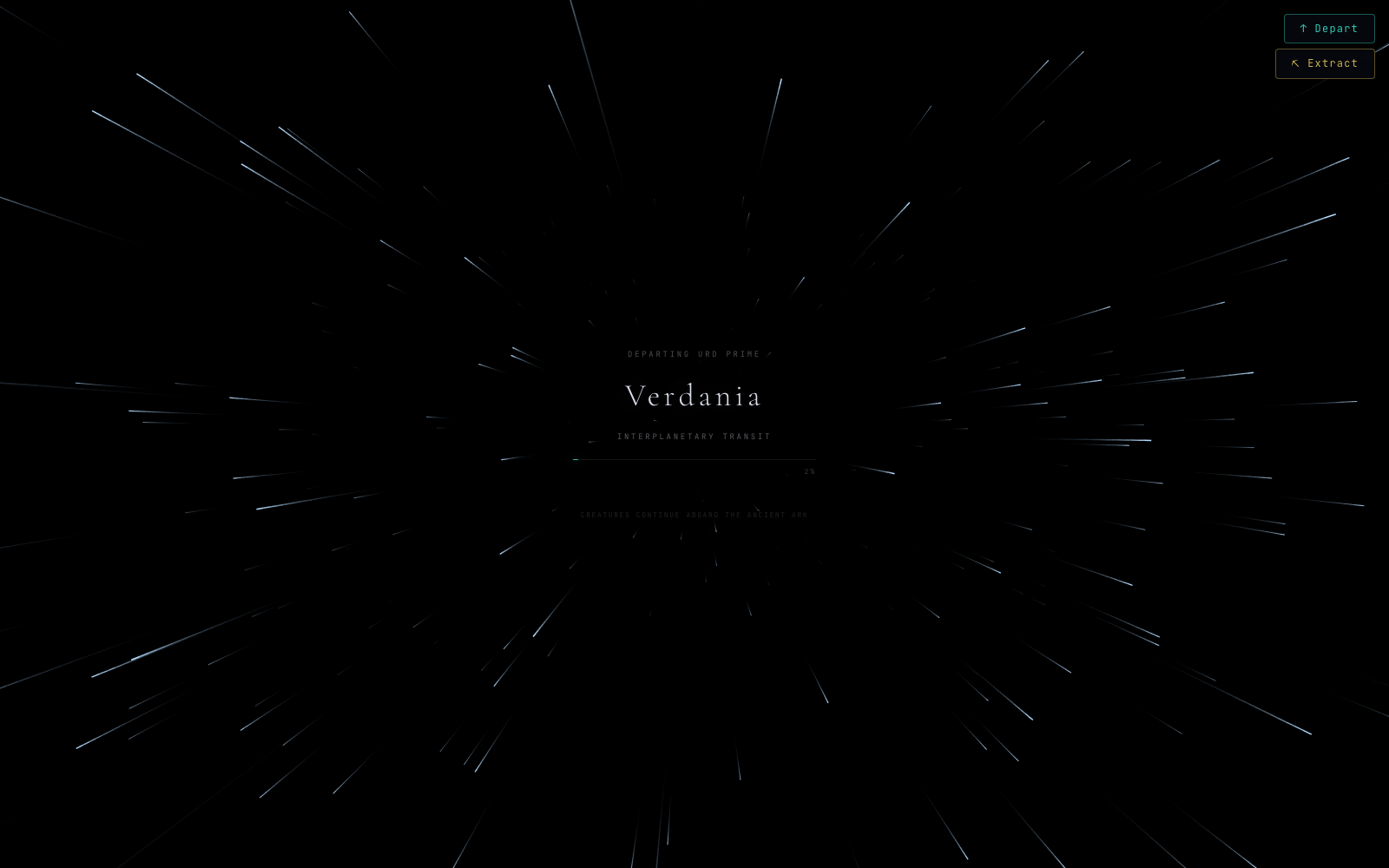
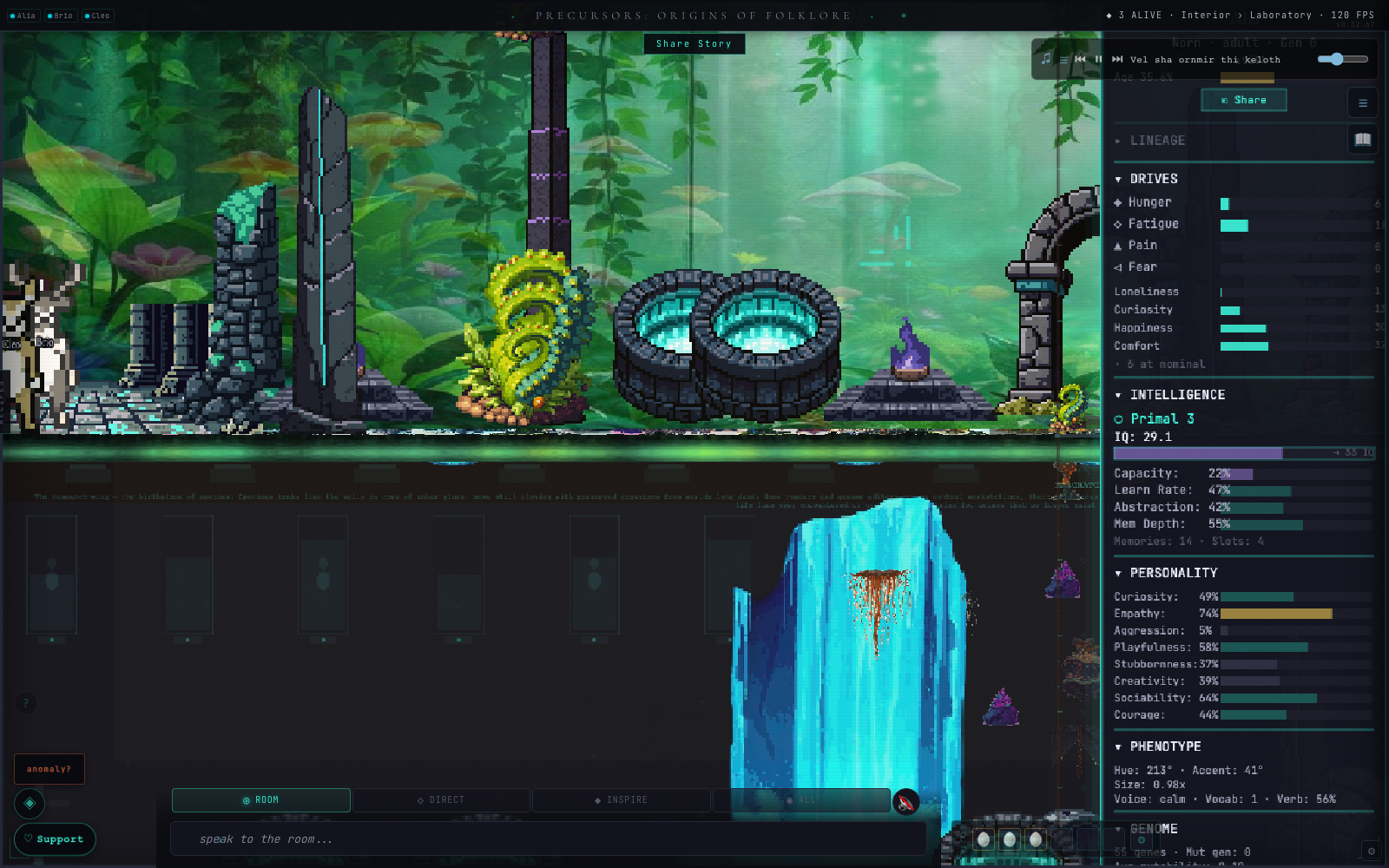
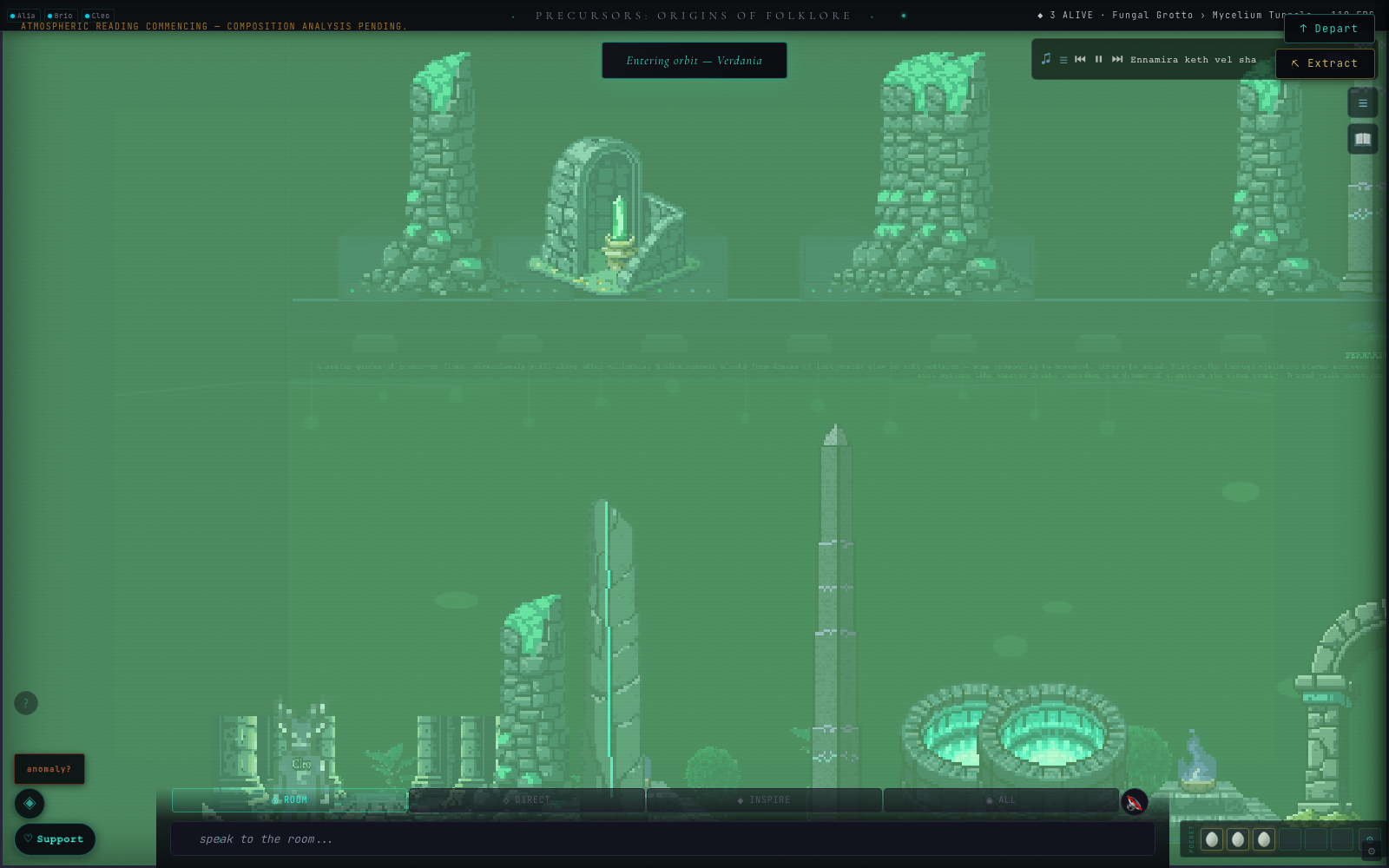
Captured from build v0.32.67 on 15 August 2026. Unstaged.
◈ LIGHT SPOILERS — the feature roadmap
Below is what exists, what exists but is hard to reach, what is being built, and what is still on paper. It names systems and a little of the world, so if you would rather meet all of it cold, stop here. It does not give away the ending.
PLAYABLE NOW
You will meet this in an ordinary session.
- Creatures with real biochemistry, genome and personality, with hormones that are inherited and differ by sex. No scripted emotion
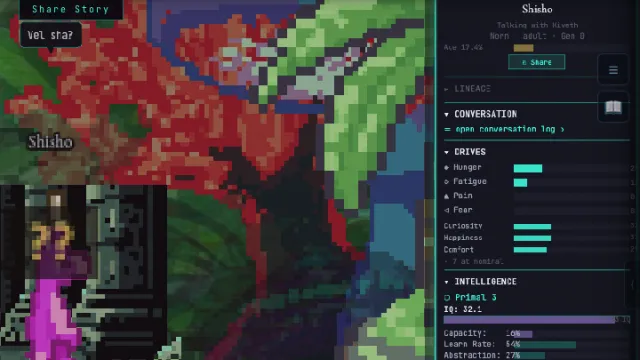
- Two-speed minds: a fast reflex, and a language model that runs when the reflex defers
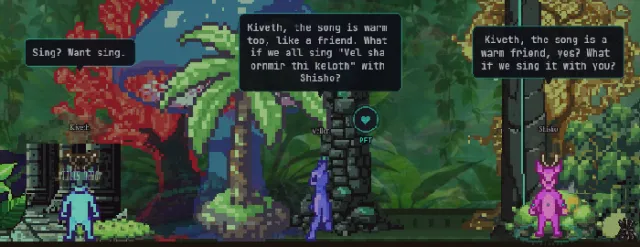
- Speech that is judged for quality, feeding an intelligence gene that is inherited
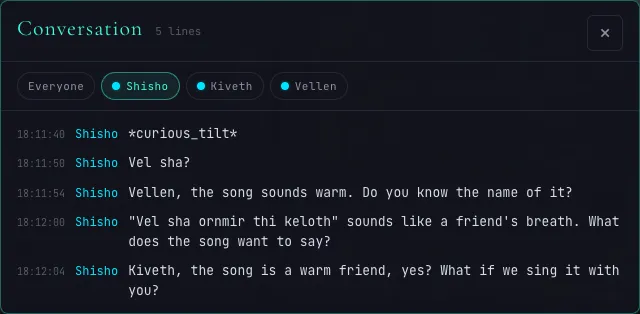
- Creatures speak aloud in their own languages. Speech bubbles translate, and a conversation log keeps what was said
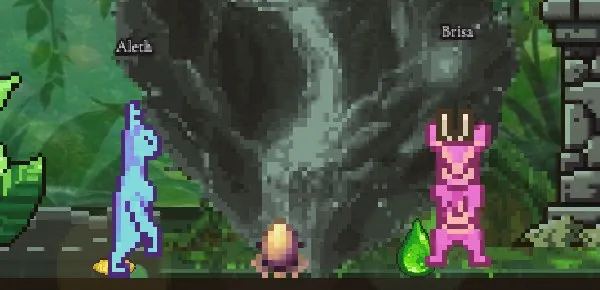
- Courtship you can see, then gestation, egg-laying and hatching, driven by chemistry rather than timers
- Short lives, written in the genes: childhood lasts about an hour, so generations turn over while you watch
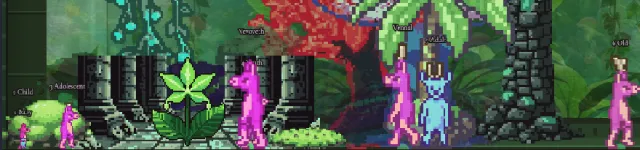
- Cross-species breeding, named hybrids, and inbreeding with real consequences
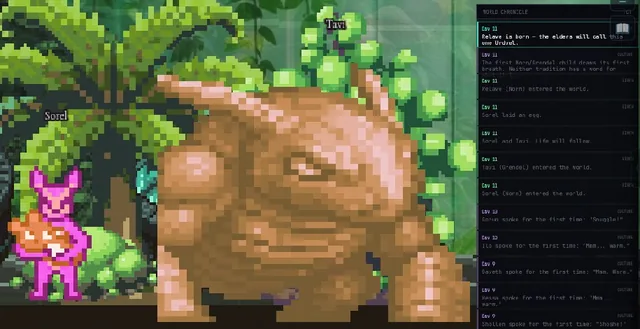
- Babies cry, and adults hear it at a distance, parents far more loudly than strangers. Babies are carried, cradled and nursed, and nursing brings water as well as food
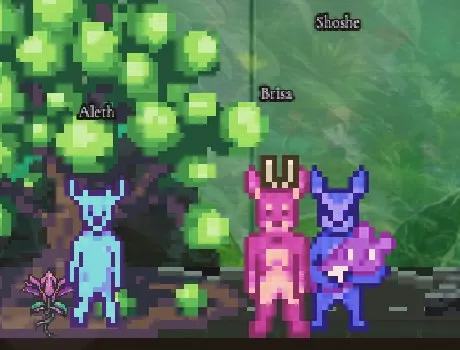
- Children play together: piggyback, tag, leapfrog, patty-cake
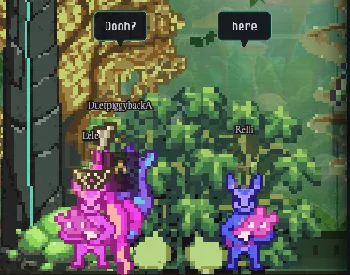
- Pair bonds, more than one at a time and shaped by culture. Rivalry, and gossip that reaches a creature's actual thoughts
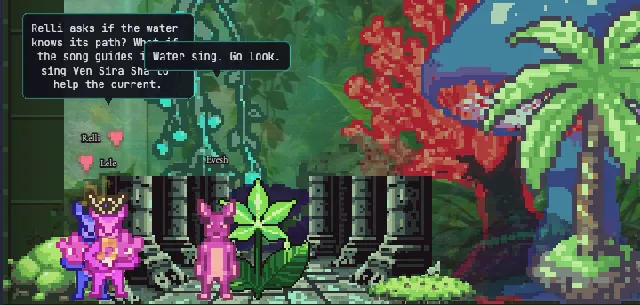
- Choruses: when three or more creatures sing near each other, they gather, turn inward and sing the same song together
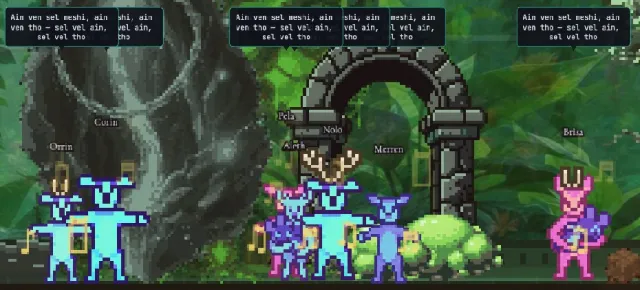
- Your presence registers biochemically before any thought happens
- Six biomes across an interior of ninety rooms, and doors that open only to a sharp enough mind
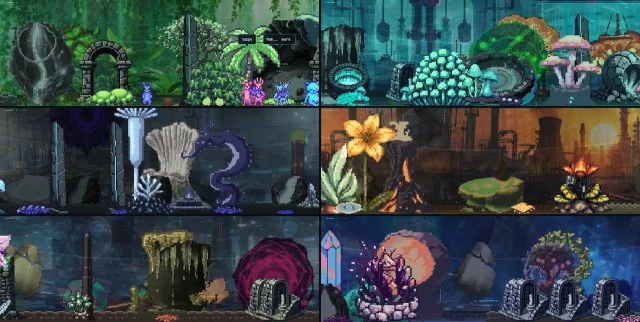
- Survival that reads true: creatures store energy, thirst sends them walking to water, and friends and partners bring comfort
- Invention: creatures combine materials, witness each other, and teach recipes on
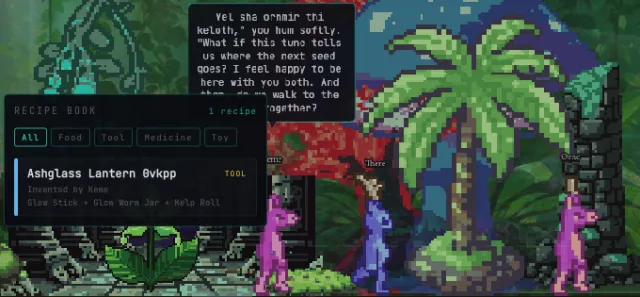
- Several save worlds, a choice of starting tier, achievements, and save files you can download and restore
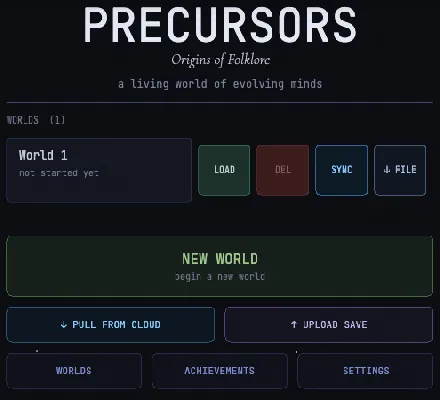
- Runs in a phone browser, including iPhone Safari
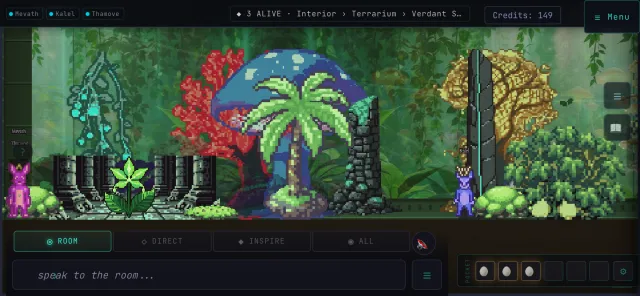
- No account needed. Guest mode by default. Bring your own model key, or buy credits for sharper minds
BUILT, RARELY SEEN
Running in the game. It takes a long session, or luck, to meet it.
- A voyage measured in generations. Reaching somewhere new takes hours of play, and the first generation may not live to see it
- After that, your creatures decide where it goes. Each later destination is scored from their personalities, memories and species. You are never the one steering
- Planetfall: some of your creatures go down to the surface of another world
- Worlds remember. What one visitor leaves on a planet, the next one finds
- Ships meeting: star charts really do spread between vessels, and carry traces of who saw what. Direct ship-to-ship messaging is written but nothing delivers it yet
- Death is not always the end of a mind
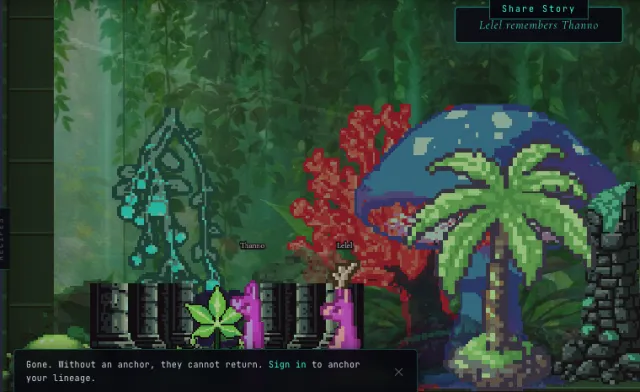
- Ideas spreading and drifting across a population
- More than thirty live chemical readouts, eight personality traits, phenotype and genome. All computed every frame, all sitting behind an in-game upgrade most players never get
IN PROGRESS
Being built now. Some of it is already live.
- Making the simulation legible. This is the real work. So far: an onboarding that explains every control, readable speech with a conversation log, each creature's current action under its name, a roster you can click, and a chronicle that fills in with what you have seen
- Creatures that build: they plan a structure, gather the materials and put it up, and each species' style emerges on its own. They enjoy making things, and tire of making the same thing twice. Right now a bug stops buildings in the live game from being finished, and a fix is being made
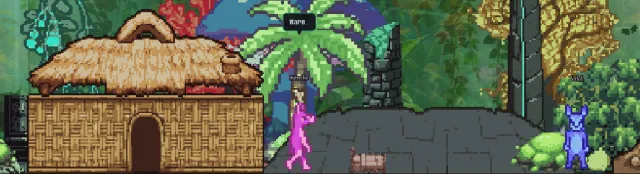 From a test build.
- The full sound pass. Voices are in; most of the assigned effects are not
- A population that settles on its own. Crowding and scarce food already slow births: a packed room raises the creatures' stress hormones, which dampen the urge to mate, and a hungry creature is less fertile. A fixed upper limit is still there as a backstop, and taking it out is next
PLANNED
Specified. Not built yet.
- Babies who know their parents' voices before they hatch
- A galaxy at real scale, where crossing paths with another player is rare
- Ship-to-ship docking, and creatures crossing between them
- Civilization-scale society, above the interpersonal layer that already works
Checked against build v0.40.0.
UNDER THE SPRITE
A creature on screen is a small sprite doing something modest. Underneath it is a 118-chemical biochemistry, a genome that expressed those chemicals through organs and receptors, a network deciding whether it is worth thinking at all, and a mind that sometimes says something no one wrote. The depth is already running; making it visible is the next stretch of work.
Come and watch them think.
Free to play. No account needed. In your browser.