Play Along
The last post was about babies asleep on their parents. That was version 0.35.59, a week ago. The game is on 0.42.0 now, and a lot has landed in between. The part we keep stopping to watch: a Norn with a drum in its hands hears music start, and joins in.
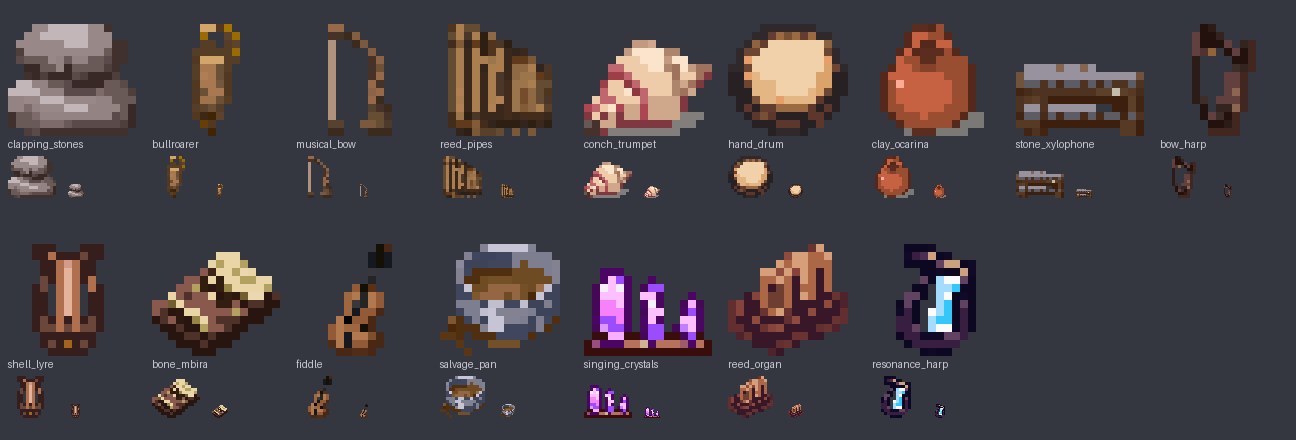
Instruments, and playing along
Norns can now make instruments, and there’s a long ladder of them. At the bottom are two stones you clap together and a bullroarer on a string. Further up come reed pipes, a hand drum, a clay ocarina, a fiddle and a stone xylophone. At the top is a resonance harp. They fall into four families: rhythm, wind, strings and chimes. A Norn who has made a drum finds the next drum easier to work out than a flute.
A better-made instrument carries further. Everyone who hears it gets a little less lonely, and they remember who was playing.
Then there are the wild ones. Twelve instruments are cut from living plants, and a Norn has to be standing near a grown plant of the right kind to make one. Different plants grow in different places, so the music changes with the landscape: a cocoon rattle, a bubble pipe, a kelp horn, a gill harp.

You can hear all of them. Every instrument has its own recorded sound, and you hear it when you’re looking at the room it’s played in.
Best of all, they play together. When music is playing, or another Norn is singing nearby, a Norn holding an instrument may join in for ten to thirty seconds. A Norn with nothing in its hands sings along instead. Singers and players count as each other’s company.
Growing up, and growing old
The founder asked for about fifteen minutes of helpless baby, then the better part of an hour as a small child growing into an adult. That’s how it is now. You have long enough to watch a baby get carried, fed and sung to, and the child it becomes is around long enough for you to get to know it.
Every species also gets a lifespan from its own lore, not one number for everybody. Ettins and Dvergar live about two thousand years. That’s around a hundred hours of play. The Fylgja don’t age at all, and nor do the few others whose stories say they never die. Every species that does age now has an elder stage, and how fast it ages comes from its genes.
A Fylgja keeps its company
A Fylgja is a companion spirit that keeps watch over the Norns it lives with. In the founder’s colony, one named Ember kept getting lost. It would wander too far, the Norns would walk out through a door, and Ember would be left alone, getting lonelier and lonelier in an empty room.
Now a Fylgja stays within reach of its company. It remembers which door they took and follows them through it, even into a room it has never seen. It puts off lying down until it can sleep beside them, not a room behind. If they leave while it sleeps, it wakes up and goes after them. On the founder’s save, Ember’s worst loneliness dropped to about a third of what it had been.
Machines you can use
There are machines scattered through Precursors, and until now they were mostly pictures. Most of them couldn’t be seen until a Norn walked right up to them. Clicking did something on 3 of 33.
Now a machine stays visible once it’s been found. A glowing socket on its face tells you what it is at a glance. Cyan means you can use it. Violet means it’s sealed by a puzzle. Amber means it isn’t working yet. Grey means only a creature can work it. Click a machine and its console opens, with its name written in its own glyphs and the plain word underneath.
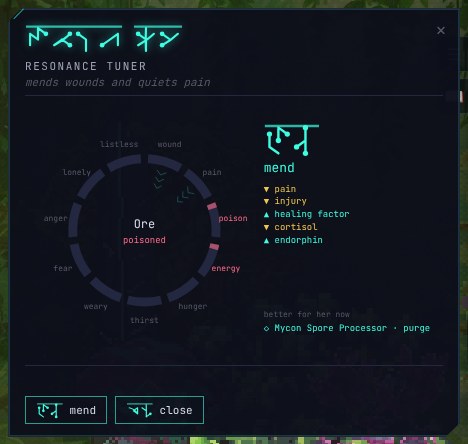
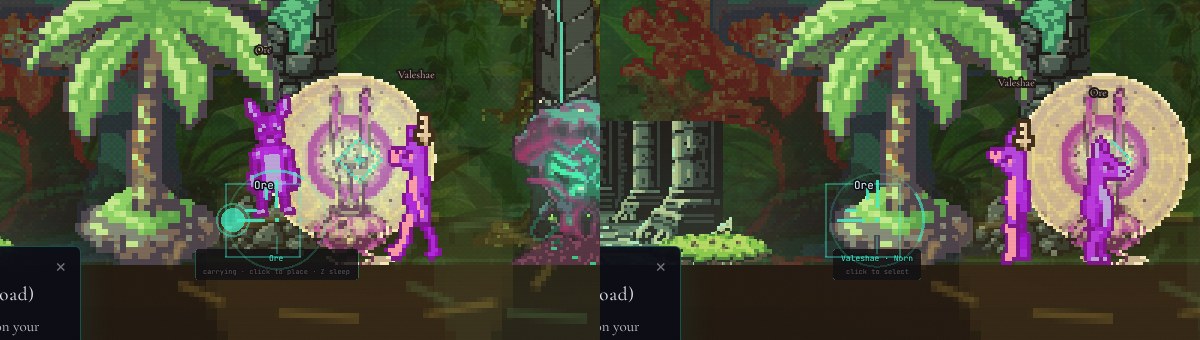
Some machines are bays. Pick up a hurt Norn, carry it over, and let go. The Resonance Tuner mends wounds and quiets pain. Another machine draws poison out. If the Norn you’re holding needs something else more, the console tells you which machine would be better. Press [ and ] to step between the machines you’ve found. While you’re carrying someone, it puts the ones that would help them first. (Game speed has moved to , and .)
The sealed ones are puzzles, and we won’t say more about them than that.
The Dvergar
The Dvergar are smiths, and they live by measuring. This update gives them a whole culture. They name their tools, and they grieve for a tool that breaks. A young maker takes a breath before its first measurement. Craft-mothers take apprentices.
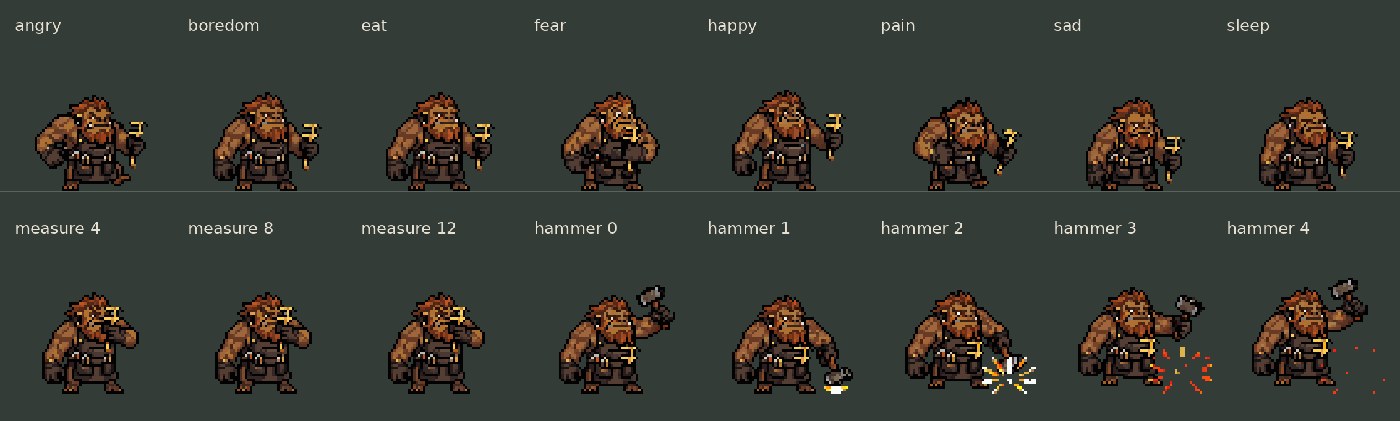
They court by tending tools side by side. Once in a life, a bonded smith forges its partner a ring sized to fit. Their young walk to the forge to sleep in its warmth, and an elder sings them Rin Vel Gal Hin, the forge’s lullaby. The young have their own art now, with a big head, a rusty mane and heavy hands, and no beard or apron yet. They grow into the adult look as they get older.
Grendel courtship
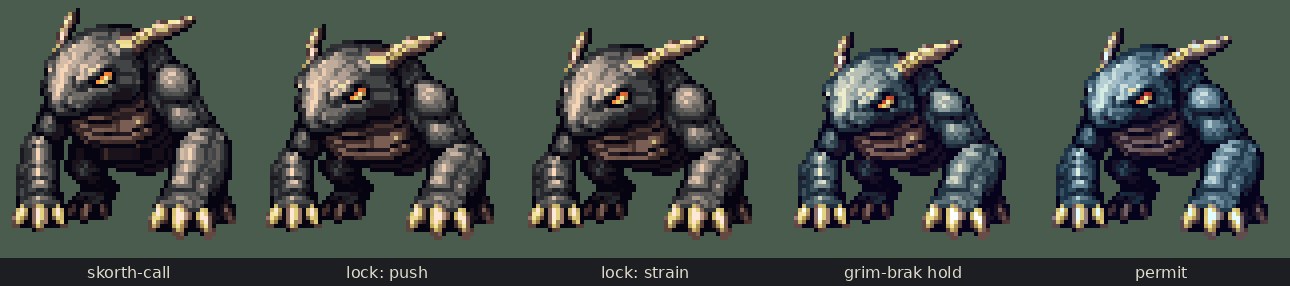
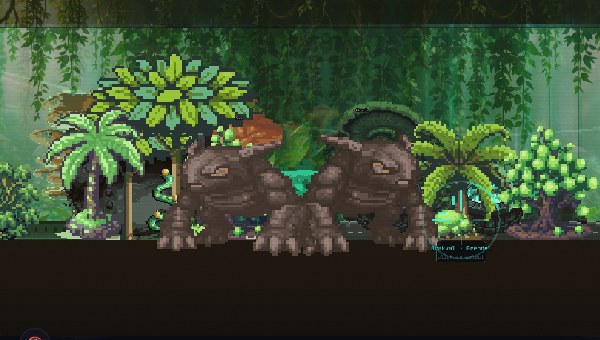
Norns court tenderly. Grendels court by enduring each other. We call it the grendskorth. Two Grendels call side by side, then lock forelimbs and push, round after round. Either can give way, and nobody loses anything. They both have to stay calm. If one gets angry, it’s a fight, not a courtship. If neither gives way, the push becomes a hold. They come out of it bonded, and each one carries a scar from it for the rest of its life.
Grendel parents don’t carry their young. Hatchlings walk from the start, follow the grown-ups around and watch what they do.
A voice of their own
We read through one live colony’s talk and found that they all sounded alike. In 620 lines, 85% had “what if” in them, and half had “and then?”. Every Norn had been handed the same example sentences, and then they heard each other repeat them.
Now each Norn gets one of 36 ways of speaking from its personality, plus a smaller second habit. A colony of near-identical founders still ends up with several distinct voices. Norns grow their own catchphrases instead of sharing one tic. When we tested it on that colony, “what if” dropped from almost every line to one in seven at most.
Since last time, too
A few things from 0.40 that didn’t make it into a post. Friends and partners are a comfort now. Being near someone a Norn trusts or loves lifts its mood a little every second, and being alone wears it down. Children play with each other: tag, piggyback, leapfrog, patty-cake, a rolling play-fight, and being tossed up and caught by a grown-up. Milk carries water, so a nursing baby no longer goes thirsty, and a baby in its parent’s arms gets a share of every drink the parent takes. Norns drink from cupped hands now.
Smaller things
- Updates without interruptions. A new version now downloads in the background. It never reloads in the middle of your game. It switches in on the title screen, when you click the new-version note, or after the tab has been in the background for a couple of minutes, and it saves and reopens your world first.
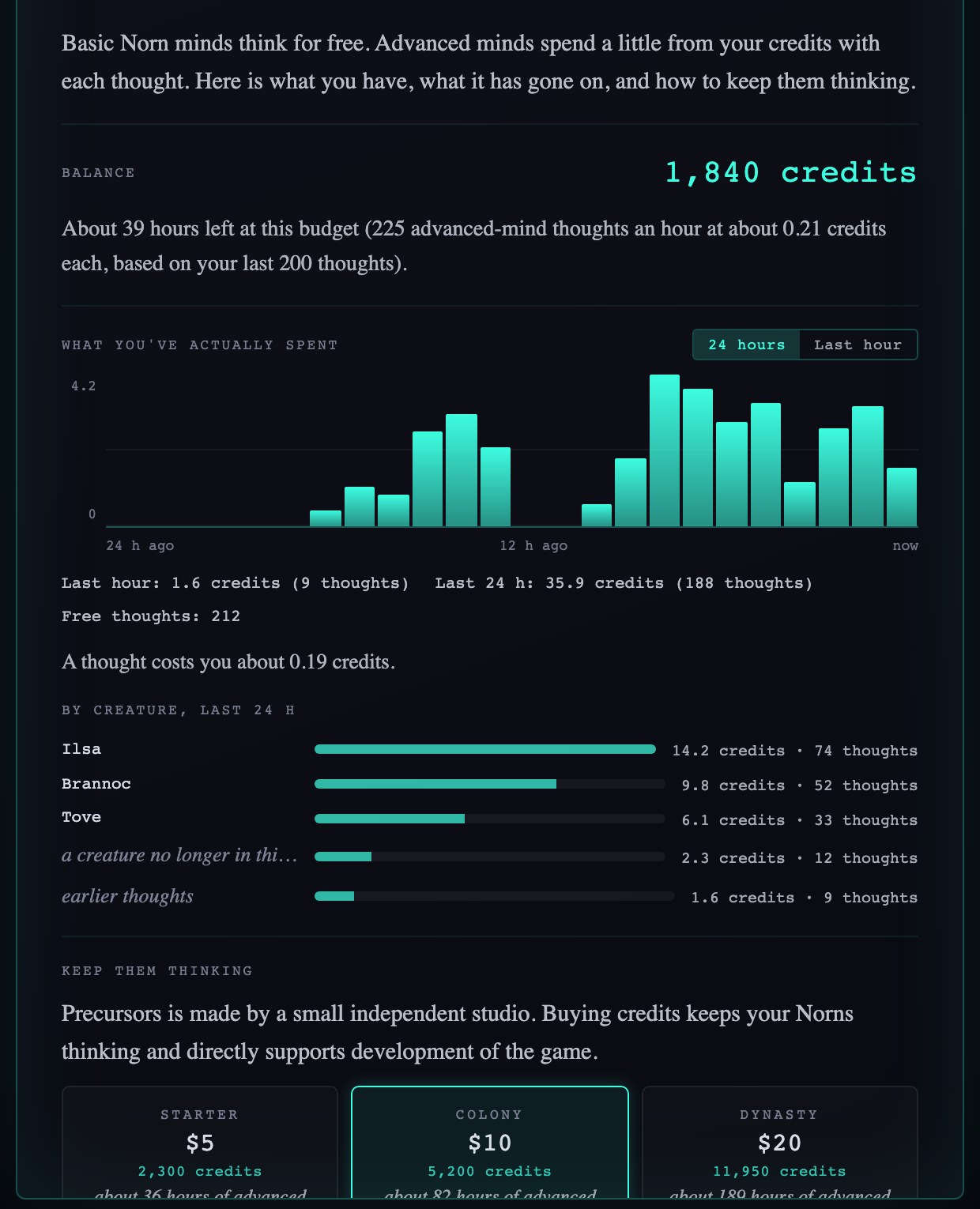
- One Norn-minds panel. Your balance updates live. A real chart shows what you’ve spent, hour by hour and creature by creature. You can buy credits without leaving the game, and there’s one field for your own key. Your colony’s paid thoughts are now paced instead of running as fast as the model can answer, so credits last much longer. Basic minds are still free.
- Kid Mode. A parent can hand the game to a child under 13. A grown-up picks where the creature minds run and sets a PIN. In Kid Mode the game sends nothing to us: no accounts, no analytics, no purchases.
- The journal tells the truth. A Norn’s journal in the inspector now shows its real memories, written so you can read them.
- Antlers. Antlers grow with age and genes, from a bud to a full rack, and they stay on through every pose.
- Your shared worlds. You can now list and delete the worlds you’ve shared.
Play it now at play.multiversegames.ai/precursors/ (or play.multiversestudios.xyz/precursors/). Pay what you can.